


There may have been a time where this was an inapprehensible concept, but the world as we know it, everything we own and virtually everything we see, is now a brand. Consumers have provided the brands they love, with their genuine trust. Consequently, in the rare case that an item is commercially unbranded, it is also rejected by consumers, who will avoid the item they do not know the source, thus, quality of. Nonetheless, not all brands are successful brands. An incredibly delicate framework of elements is required, to even begin to penetrate a market, let alone achieve credibility within it. Ergo, the following article will explore the intricate details of creating, defining and maintaining a longstanding brand.
Creating a Brand
Once a possible gap in the market is located and the product(s) that will be represented are determined, exploratory and descriptive market research must take place to identify the target group, segment the market, analyse the macro and micro environments and the competition intact.[1] Dumitriu affirms that a name must be selected carefully to represent the brand adequately, rather than the product; this decision is beneficial in the long-term, as products have a life cycle , while brands can outlive their initial products.[2] For example, Tiffany and Co, which is a luxury brand of jewellery, used to make stationary, while Abercrombie and Fitch originally sold sports gear.[3] The brand must also be devised to act simultaneously as the symbol and reference for the product or service’s identity and exclusivity,[4] therefore, emphasising the crucial aspect of brand building.
Keller proposes a branding ladder of four steps, representing the milestone objectives of “brand identity, brand meaning, brand responses and brand relationships.”[5] This is followed by a brand resonance pyramid that represents the brand building blocks of “salience, performance, imagery, judgements, feelings, resonance”, respectively. However, the branding ladder, which proposes that each step helps elevate the product to the next, does not mention the significance we place on how others value a brand. The model proposes that once a personality is formed, an immediate response and connection will follow. Yet, basing expectations accordingly may be exceedingly optimistic. There are myriad elements, such as word-of-mouth, perceived risk and refusal of other tastes, ought to be considered in between steps that can hinder the growth process remarkably. Keller (2008; cited in Farhana, 2012)[6] also states that the effectiveness of brand elements is maximised when a balance of verbal and visual context is achieved. This is an excellent approach, as it considers a multi-dimensional view of the building task, integrating consumer behaviour aspects with safety measures to protect the brand against unforeseeable market changes.
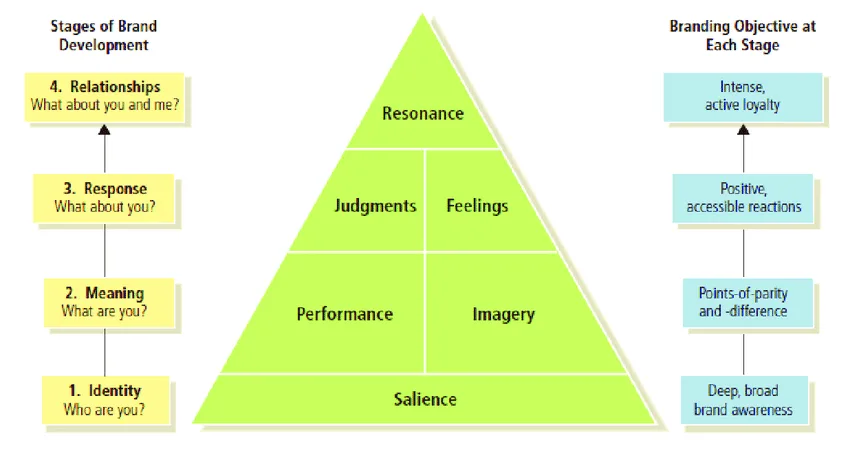
Figure 1: Brand resonance pyramid (Keller, 2013, adapted from Satria, 2018).
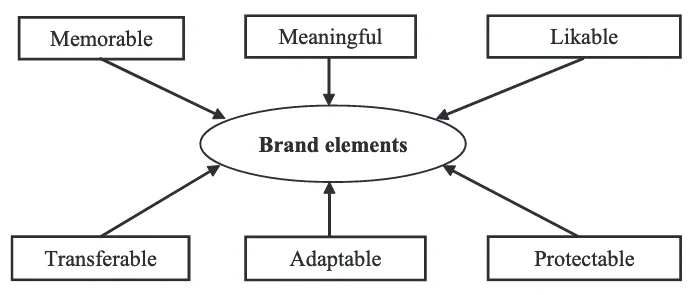
Figure 2: Criteria for choosing brand elements (Michalski, 2017).
Maintaining a Brand
Once a brand establishes itself as a player in the market, it must work to maintain its longevity. Consumerist culture is unpredictable and Generation Z, in particular, are a rapidly evolving segment of customers who thrive on innovation, yet simultaneously seek vintage traces that they believe add a ‘cool’ factor. Their infamously short attention span of an average 8 seconds, as opposed to Millennials’ 12 seconds,[7] causes them to get bored of what they possess easily, thereby moving onto newer things, with little to no remorse or loyalty. On the other hand, brands like Apple have continuously captured consumers’ attention, despite ever altering their visual style or operating systems radically. By uniting under a dedicated brand community, Apple enthusiasts have executed collective value creation[8] aiding Apple in effortlessly crossing the chasm and maintaining an ever-increasing premium price. This kind of dedication is also a seamless model of brand loyalty. One motivation for Apple loyalists is the fact that all Apple products are compatible with each other and that data can exist and be transferred between all products, such as iWatch, iPhone and MacBook through iCloud.
Notably, Yi and Jeon, found that brand loyalty can be acquired via programme loyalty, indicating that long-term relationships may be formed between consumers and low-involvement products, so long as the loyalty programme assures value.[9] Nowadays, most brands have their own characteristic loyalty programmes. Starbucks Rewards offers a star-based membership program that awards members with 1 free coffee for every 15 they have had, as well as exclusive drinks and discounts on toppings, whilst Amazon Prime’s higher involvement programme entices subscribers to same-day and free delivery options for paying Prime subscribers.
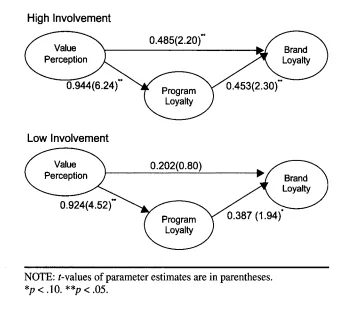 Figure 3: The effect of value perception on routes to brand loyalty (Yi and Jeon, 2013).
Contrarily, brand equity is one of the ultimate means of retaining relevance only few can master. It is built over time as a result of stimuli such as effective positioning, repeat advertising and product visibility. Nevertheless, several high-profile brands are entirely against making their brand easily attainable and may view this as “cheapening” their brand. In review, this is an incredible tactic for an already salient brand, such as Mercedes, whom you will never see advertised on television, as opposed to Toyota or Ford who do so often. However, it is a difficult task to develop awareness for a fairly new brand that is not consistently in the public eye; thus, this method requires a certain level of existing brand awareness.
Symbolic Brands
One common point symbolic brands must conquer, in order to become successful, is how to relate and appeal to individuals’ narrative identity, the autobiographical tale of one’s past, present and coveted future.[10] Symbolic brands often attract hedonistic consumers who strive to create an identity for themselves that represents their ideal self. This may be a man who wears Rolex watches to signify their status, or an environmentalist girl who only wears Koi Footwear shoes because they are vegan and environmentally friendly. Either way, these are selected carefully to represent what the customer believes to at least partly define them. Whilst the example of vegan footwear is valid in the context of symbolic representation of environmentally conscious persons, most symbolic brands are consumed on a non-rational and predominantly emotion-driven basis. Mittal’s Affective Choice Mode supports this argument, as it advocates the idea of emotive judgements for brands occurring on an “alternative mode of preference formation”, rather than consciously.[11] On these premises, strategic management of the brand image is key to create a distinguishing personality and message; whether it is from a personified or materialistic point of view.
However, in the current age, where society is becoming increasingly sensitive to social issues, thus, prioritising political correctness over humour and semiotics, it is vital to tread lightly when launching an advertising campaign, or even a minor social media post. One must ensure that content produced is not tone-deaf to contemporary issues or at least includes a trigger warning to those who could be affected by what the message promotes. Likewise, celebrity endorsements must also be chosen from non-controversial figures who ultimately reflect the brand and campaign message. The 2017 Pepsi advertisement featuring Kendall Jenner failed to accurately evaluate both the former and latter matters when it depicted a carefree Jenner joining and then pacifying a protest by offering a police officer a can of Pepsi. The advertisement was released in the midst of #BlackLivesMatter protests and police brutality was in the spotlight. Pepsi later apologised profusely for the backfiring advertisement and removed the content with immediate effect.[12]
Functional Brands
As opposed to symbolic brands, functional brands are generally lower-risk, lower-involvement and lower in price. Therefore, the main features and highlights of the product they represent are generally its practicality, thereby, functionality. Hence, brand performance and product-orientated development should be the main focus of manufacturers. Similarly, the positioning of the brand shall correspond with the rational, problem-solving abilities of the product, taking the target audience into account.[13]
After the performance strength and other distinguishing properties that signify the superiority of the brand are established, the next step is to assign symbolic value to the otherwise utilitarian brand. Symbolic brand strategies may be used in order to achieve this. Much like their symbolic counterpart, functional brands can be assigned personalities, romantic, friendly or humorous emotions and statuses. Due to its lighter, less serious persona, the latter may often associate itself with a memorable mascot. This is an exceptional method of creating a personality to represent the brand whilst concurrently incrementing saliency through means of association. Pairoa and Arunrangsiwed state that brand mascots may be a better executive decision than any other celebrity, who can often be accused of being “everywhere”, thus be deemed an overkill, or that the positive attributes of the aforementioned celebrity simply may not transfer to the product.[14] Contrastingly, a brand mascot would be designed specifically to reflect the values of the brand, possess merely positive qualities and be void of human error. Functional brands who boast brand mascots include Duracell with its Teddy Bear, The Michelin Tyre Company’s Michelin Man and the Compare the Market Meerkats. Moreover, exposure and shelf space are also important aspects of building brand awareness and credibility, as well as reinforcement of benign perceptions and addressing further circumstances depicting the product’s capabilities.
Personal Brands
An emerging genre of brands is the divergent concept of personal branding, which has become increasingly popular amongst both Millennials and Generation Z. While the concept itself only surfaced a mere two decades ago, people have always had their personal brands. This may have been related to dress sense, skills, occupation, personality or a combination of factors; yet, the impression conveyed to onlookers, as a result of idiosyncratic traits and preferences, is a brand in itself. In fact, associating with other powerful brands can strengthen one’s imposed identity (Hyder, 2014; cited in Petrucă, 2016).[15] The sudden popularisation of social media platforms, such as Instagram, Facebook, Pinterest, YouTube, Twitter and TikTok, allowed users to effortlessly share their lives, opinions, interests and knowledge either to their friends, acquaintances or complete strangers who are keen followers of whatever content is being posted. The psychological cost of being bound by ‘likes’ and ‘followers’ has been the fixation on social desirability. Consequently, a major fraction of users are currently attempting to build a successful, interesting personal brand through social media that competes with their peers or ‘influencers’ they idolise.
Developing one’s personal brand bridges the gap between the present self and the ideal self.[16] There are various key points and words to consider when building and maintaining a personal brand. The first is that nothing online is ever erased completely; therefore, political correctness must be upheld constantly. The originality of content, aesthetics - for aspiring influencers or users of design-orientated platforms, such as Pinterest - consistency amongst the type of content posted and the time frame it is posted within are vital. Collaborations with other influencers or mutual public relations (PR) through paid partnerships with clothing, make-up, technology brands – or other product companies, depending on the influencer’s main content - have become a common marketing tactic, as well as a source of remarkable income for some. Eleonora “Lele” Pons, who is one of the highest-paid Instagram influencers, with 42.7 million followers, reportedly earns over $144,000 per post.[17] However, it is noteworthy that despite going viral in 2013 and branching out to numerous other endeavours, Pons still remains continuously active on all her social media platforms, posting daily, in order to retain an involved follower base.
In consideration of the disparate types of branding, as well as the steps to building and maintaining a brand, it is important to note that a standardised approach is rarely the key to success, as there are unique obstacles in the journey of each brand or product that must be overcome. Once the idiosyncrasies are familiarised with, the unique problems can also be dealt with through perseverance and confidence in the brand.
References
[1] Sarstedt, M. and Mooi, E. 2.3 Determine the Research Design. A concise guide to market research: the process, data, and methods using IBM SPSS Statistics. Third edition. pp. 28–31. (Springer, 2019).
[2] Dumitriu, R. Brand Policy Instruments: contributions to Brand Equity. Annals of the University of Craiova, Economic Sciences Series, 1. p. 167. (2013).
[3] Vanya, M. 5 Brands That Changed Their Business Model Entirely, Geneva Business School. https://gbsge.com/en/news/news/newsroom/5-brands-that-changed-their-business-model-entirely/. (2020).
[4] Kapferer, J.-N. and Kapferer, J.-N. Strategic Implications of Branding’, The New Strategic Brand Management: Advanced Insights and Strategic Thinking. p. 37. http://ebookcentral.proquest.com/lib/reading/detail.action?docID=871552. (Kogan Page, Limited, 2012).
[5] Keller, K. Developing a Brand Strategy. Strategic Brand Management: Global Edition., pp. 107–108. http://ebookcentral.proquest.com/lib/reading/detail.action?docID=5138154. (Pearson Education UK, 2013).
[6] Farhana, M. Brand Elements Lead to Brand Equity: Differentiate or Die. Information Management and Business Review, 4(4), pp. 223–233. doi: 10.22610/imbr.v4i4.983. (2012).
[7] Shatto, B. and Erwin, K. Moving on from millennials: Preparing for generation Z. The Journal of Continuing Education in Nursing. 47(6), pp.253-254. (2016).
[8] Schau, H. J., Muñiz, A. M. and Arnould, E. J. How Brand Community Practices Create Value. Journal of Marketing, 73(5), pp. 30–51. doi: 10.1509/jmkg.73.5.30. (2009).
[9] Yi, Y. and Jeon, H. Effects of Loyalty Programs on Value Perception, Program Loyalty, and Brand Loyalty. Journal of the Academy of Marketing Science, 31(3), pp. 229–240. doi: 10.1177/0092070303031003002. (2003).
[10] McAdams, D. P. Narrative Identity. Schwartz, S. J., Luyckx, K., and Vignoles, V. L. (eds) Handbook of Identity Theory and Research. pp. 99–115. doi: 10.1007/978-1-4419-7988-9_5. (Springe 2011).
[11] Mittal, B. The role of affective choice mode in the consumer purchase of expressive products. Journal of Economic Psychology. 9(4), pp. 499–524. doi: 10.1016/0167-4870(88)90016-5. (1988).
[12] Smith, A. We missed the mark’: Pepsi pulls ad featuring Kendall Jenner after controversy, NBC News. https://www.nbcnews.com/news/nbcblk/pepsi-ad-kendall-jenner-echoes-black-lives-matter-sparks-anger-n742811. (2017).
[13] Janiszewska, K. and Insch, A. The strategic importance of brand positioning in the place brand concept: elements, structure and application capabilities. Journal of International Studies, 5, p. 11. (2012).
[14] Pairoa, I. and Arunrangsiwed, P. An Overview on the Effectiveness of Brand Mascot and Celebrity Endorsement. International Journal of Economics and Management Engineering. 10(12), pp. 3821–3827. (2016).
[15] Petrucă, I. PERSONAL BRANDING THROUGH SOCIAL MEDIA. 6(4), p. 4. (2016).
[16] Rangarajan, D., Gelb, B. D. and Vandaveer, A. Strategic personal branding—And how it pays off. Business Horizons. 60(5), pp. 657–666. doi: 10.1016/j.bushor.2017.05.009. (2017).
[17] Komar, M. The Highest Paid Social Media Influencers, Livingly. https://www.livingly.com/The+Highest+Paid+Social+Media+Influencers. (2020).