

History · International Relations
Relevance of the Middle East in International Relations
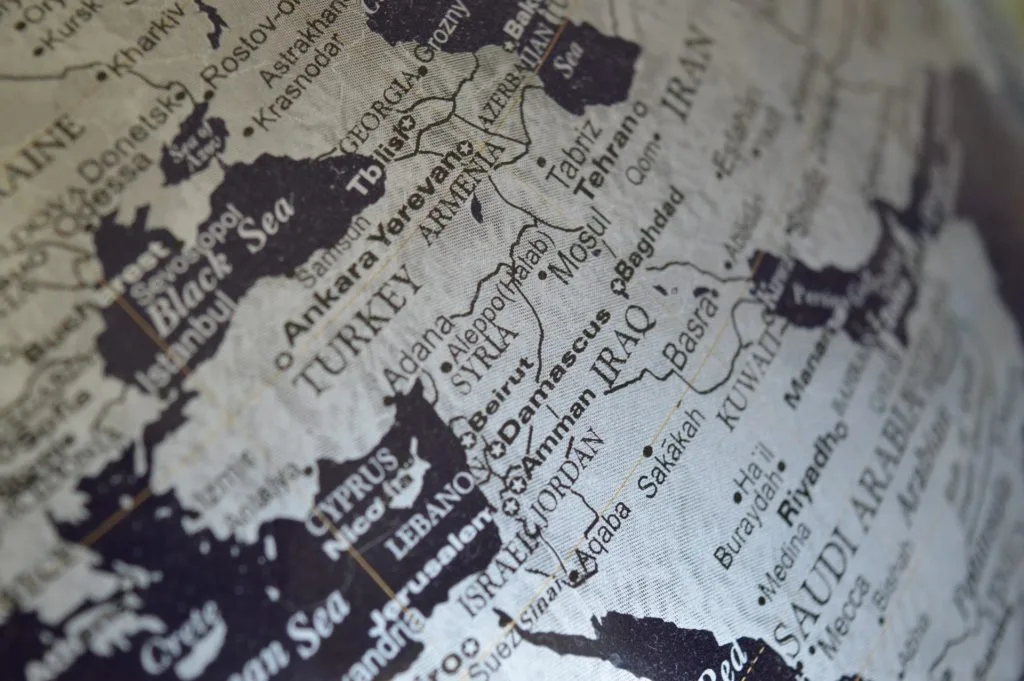
The Middle East, or with its greater name in the field the Middle East and North Africa (MENA), region can be considered to be one of the most studied regions in international relations. Starting from Morocco to Iran, various aspects of the region has always been the focus of international relations academics, including wars, political economics, revolutions, energy politics, and many others. Although the regional study of the Middle East tends to be dominated by the Arab-Israeli conflict, its relevance in the field is much more comprehensive than this.
The relevance of the Middle East in international relations is not new. It is possible to say that the roots of the MENA region as a focus of study goes back to colonial, or by its other name, oriental studies. At first, this was a field in which, predominantly Western, social scientists such as historians, anthropologists and sociologists were studying the region and its population to extract knowledge. These social scientists, however, received heavy criticisms later on because of being pejorative and unethical in their ways of conducting research. One of the greatest criticisms came from Edward Said who coined the term ‘orientalism’ in his book of the same name in 1978. Said argues in his book that the West, or the coloniser, has portrayed the East and the Orient through an imperialist perspective and criticised this perspective and ways of studying the region.[1] Although the first studies of the region can be criticized, it is possible to see that the region has undergone research beginning from a long time in history and the dynamics of the region are valuable to be studied and specialised which even led to the formation of a great study field in area studies as a sub-field of greater international studies.
Beginning with one of the most significant reasons for its relevance in international relations, I could consider the MENA region to be one of the most, if not the most, diverse region in the globe. First of all, it hosts almost 15 to 20 countries (depending on your definition of region), with various nationalities, ethnicities, and religions. Their people even vary in terms of identification with the aforementioned identities. In addition to this, these countries have so many different political systems, including absolute monarchy, presidential system, theocracy, parliamentary democracy, and even functional federation, leading to a formation of an environment where the region can be studied with alternative approaches. From my point of view, the culturally, politically and ethnically rich diversity of the MENA region raises ambitions of studying and researching, and makes it more interesting, in contrast, to Europe, for instance, which is a region where the studies mainly circle around high-level politics.
Furthermore, alongside its diverse political variables, and most probably because of having that many diverse political variables, the MENA region has always been prone to conflict, and still is today. The political tension and the ups and downs the region is going through draws more attention to it, as well as opening new areas of research for specialists and academics. The political and historical developments the region has experienced, and is still experiencing, make it remain at the top agenda of global affairs. As previously mentioned, wars - both intercountry and civil -, revolutions and political or diplomatic conflicts give a way to more and more researchers being interested in the region. Dating back to the breaking up of the Ottoman Empire and up to today’s Syrian and Yemeni Civil Wars, area specialists and international relations academics studied and continue to study the region, trying to analyse the characteristics of political or violent incidents and other events linked to these cases.
Although the MENA region has always been on the agenda of both global politics and the academic world, with the Arab-Israeli conflict, this attention has increased after the 9/11 attack in the United States. The main reason for this was because in the post-Cold War era this incident was the first open challenge to the hegemony of the United States in the global order. This event and the following invasion of Iraq by the United States shifted a lot of specialists’ and researchers’ interest in the region to both study the possible impact of this either in the region or the whole global politics, and to contribute more to the international security and terrorism literature that had already existed in the academia. Moreover, with the start of uprisings in the Arab countries of the region, known as the Arab Spring, the region attracted political, and other social, scientists who wanted to study and explore the changing political and social dynamics as a result of popular movements. Most recently, with the rise and fall of one of the bloodiest terrorist groups, the Islamic State of Iraq and the Levant or Syria (ISIL or ISIS), it is visible that the region is receiving more attention where junior academics, like me, in different specialisations want to analyse the characteristics of jihadist groups, changing power dynamics in the region, and most importantly the shifting norms of the global international security.
The MENA region, being prone to violence and political conflict, is not the only cause of it being at the focus of specialists and academics. Another significant reason for this attention is the political, intellectual and philosophical developments in the region. Back in the Cold War, this political intellectuality was about the newly rising Arab nationalism that led to the formation of new political perspective in the region and of the Non-Aligned Movement (NAM) which had prominent members from the region and was an open challenge to the Cold War balance of power. Also, after the failure of the intellectual Arab nationalist thought, a new phenomenon in the region, that is still going through research and analysis through multiple perspectives, has emerged: political Islam. The impact of political Islam in the MENA region and even in the greater field of international relations is one of the most up to date topics that are being studied in international relations. The process of toppling dictators, establishing new governments or making revolutions in the region are all assumed to be linked with political Islam one way or another.
In conclusion, the MENA is a region that has a long and complicated historical and political background. With its highly diverse population and political environment, it ranks as one of the top sub-fields of international relations. However, given the relevance of the MENA region in this field, both academically and in terms of global politics, it is significant to mention that the region should be studied with alternative perspectives by those not only focused on war and conflict. The other aspects, especially the political intellectual and social studies, need to gain more importance and receive more attention by the combination of, and cooperation among, fields that are interdependent with international relations, such as; anthropology, sociology and many others.
References
[1] Said, E. Orientalism: Western concepts of the Orient. (Pantheon, 1978).