

Medusa: The Timeless Story of the Antagonised Victim
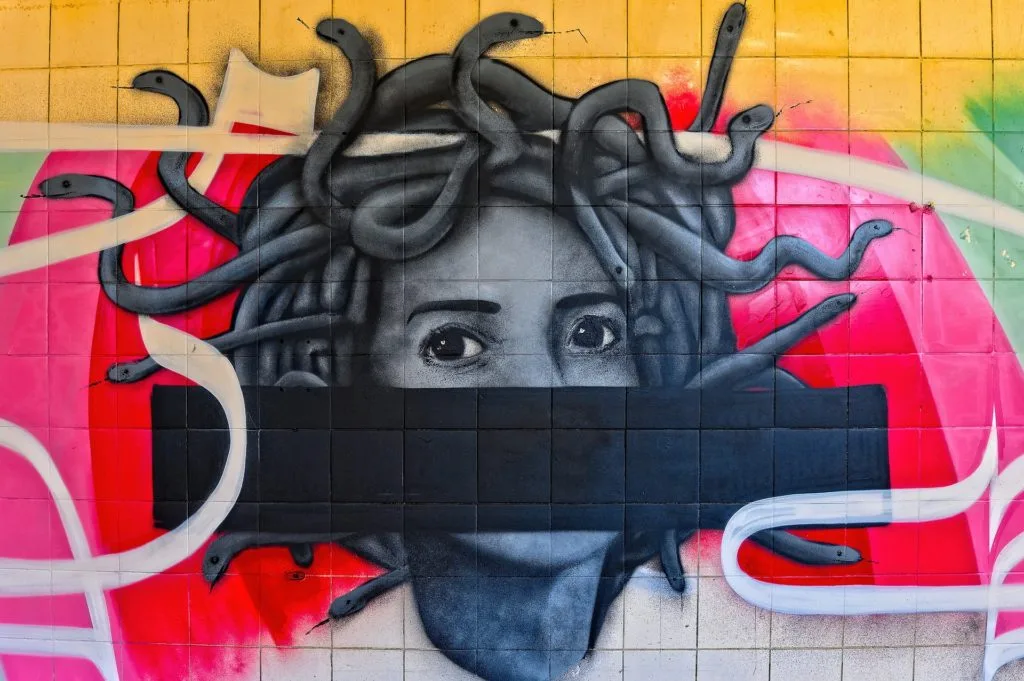
Medusa could be one of the most known figures of Greek Mythology, thanks to its modern representations of a cunning female figure with snakes for hair that turns anyone who looks at them into stone. What many don’t know is the actual story of Medusa as a rape victim. Medusa was one of the three Gorgon sisters, children of a sea god, Phorcys. She was a beautiful woman who attracted many suitors whom she rejected as she was a priestess of Athena and needed to be chaste to remain so. She then drew the attention of one of the Twelve Olympians, the God of Sea, Poseidon, who raped her in Athena’s temple. Athena turned her eyes away when the incident happened and later got angry at Medusa, the victim, for making her temple desacralised. The well-known snakes of Medusa were, in fact, a curse by Athena: a curse that turns her beauty into terror.[1]-[2] This overlooked tragedy of Medusa from ancient times, unfortunately, still protects its relevance to this day, as many Medusas are among us.
Unlike many gods and heroes of Greek mythology, Medusa doesn’t have a story of her own; instead, she is widely mentioned under the story of her killer, Perseus and her full story only comes to life when one goes through several sources. The first mention of Medusa is by Ovid in Metamorphoses circa 8 A.D.[2] Perseus tells the story of Medusa that he learns about after he kills her. None of the classical stories mentions Medusa speaking and even her story is told by another, a man, on top of that. Not knowing the story from a first-person perspective gives way to interpretations which makes her story open to exploitation. The original version of Metamorphoses was written in Latin and when talking about the encounter between Medusa and Poseidon, he uses the word “vitiasse”[3] which directly translates to “violate” or “corrupt”. While Frank Justus Miller translates this as Poseidon “ravished her”[2], Brookes More translates this as Poseidon “attained her love.”[4] More’s translation does not only alleviate the actions of Poseidon, but it also even suggests a willingness on Medusa’s part which reminds us of today’s “asking for it” narrative.
Like all Greek Gods, both Poseidon, the rapist, and Athena, the unfair judge, continue to be glorified in Greek Mythology. The only time their part in Medusa’s tragedy is acknowledged is in Robert Graves’s version of Perseus’s story, “Perseus was unaware that these had been begotten on Medusa by Poseidon in one of Athene’s temples” and even then, Perseus “decided not to antagonize them further.”[1] When a dishonourable king, who was intending to forcefully marry Perseus’s mother, asked him to decapitate Medusa, he didn’t hesitate; but he only spent a brief moment, thinking about his actions when he learnt about Medusa’s actual story. Even then, he only decided not to hold himself or others responsible for this tragedy, accountable. He is even glorified as the Gorgon-killer, as can be seen in his most famous artistic representation, the 16th-century sculpture by Benvenuto Cellini (Fig. 1).
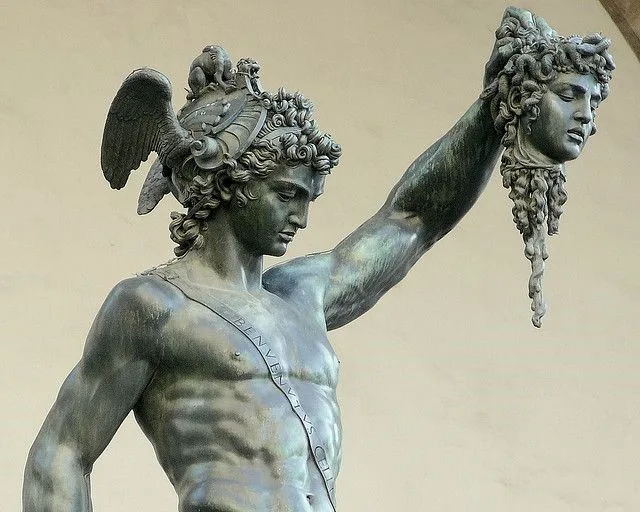
Fig. 1 Benvenuto Cellini, Perseus with the Head of Medusa, Loggia dei Lanzi in the Piazza della Signoria in Florence, Italy.
Possibly, the saddest part of Medusa’s story is that she is more of a victim of another woman than men. Although Poseidon is the one who raped her and Perseus was her killer, it is Athena who harms her the most. She “turned away” when Medusa was being raped, then cursed and banished her. Even when she left to live in a cave under frozen slopes with her sisters, pregnant with the children of a man who raped her, Athena didn’t leave her alone. Graves states that “being a sworn enemy of Medusa’s,” she helped Perseus on his quest to bring Polydectes Medusa’s head. Later on, she even put the symbol of Medusa’s severed head on her breastplate, aegis, as Perseus used it to see Medusa’s reflection and killed her without looking at her, “to frighten her fear-numbed foes”.[2] In Medusa’s story, Athena could be interpreted to be both a symbol of our society and the unfair judiciary system. Unfortunately, even in today’s society, many stay silent in the face of sexual harassment, antagonise the victim and socially execute her - if she is not killed by the rapist first. Most of the time, this is done by other women, especially in small communities where gossip is the biggest entertainment. The women are made to be ashamed of what’s been done to them, while the rapists feel no remorse.
Her curse could be seen as a symbol of social stigma. Medusa, who once attracted many suitors with her beauty, now repelled them with the fear of turning into stone. Similarly, once a woman bears the scarlet letter, the stigma that they are not “chaste”[2] anymore, people stay away from them with the fear of having that stigma stick to them.
The reason Medusa is widely known as the monster who turn men into stone and not the cursed victim is the modern representations. Medusa is a popular villain figure in fantasy movies, with the most known enactment possibly being Uma Thurman’s version in Percy Jackson and the Lightning Thief (2010)[5] (Fig. 2), and Natalia Vodianova’s version in Clash of the Titans (2010)[6] (Fig.3). Both appear as seductive, cunning villains, and Vodianova’s Medusa even appear in a serpent form below her waist. This visual depiction of Medusa appears to be a mixture with another mythological creation associated with diabolical femininity, Sirens.

Fig. 2 Uma Thurman as Medusa in Percy Jackson and the Lightning Thief (2010).
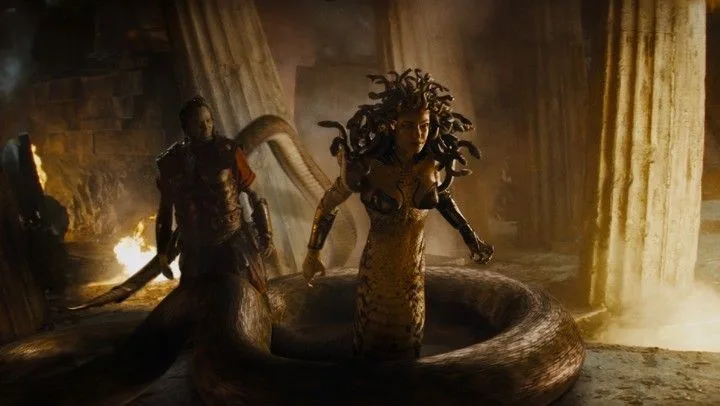
Fig. 3 Natalia Vodianova as Medusa in Clash of the Titans (2010).
Sirens were first mentioned by Homer in The Odyssey, described as “crying beauty to bewitch men coasting by.”[7] Homer includes no physical description but sources published later describe them as “bird-women” (Fig. 4).[1] In time, they took other shapes, the most popular version being the mermaid type. The discrepancies started occurring due to different versions of Physiologus, a bestiary that dated back to the 2nd century and many writers referred to. In the 12th century, a German version described Sirens as “meremanniu”, mermen, and following that, many writers like Chaucer and artists like H.J. Draper (Fig. 5) carried the mermaid-like siren image to this day. The other visual interpretations included more human-like or more changeling-like forms but the most interesting was the serpent-like interpretation which is not very well-known today. Sirens that “represent the figures of devil”[8], according to Physiologus, made their way into the bible with St. Jerome’s translation. While describing the desolation of Babylon, Sirens are told to be living in “the temples of pleasure” which meant brothels, and that they “desecrate the very idea of worship.”[9] While this Siren symbolism used for the prostitutes antagonise women sexuality, the idea of “desecration” brings Medusa to mind. Both of these women figures have connotations of prostitution and a seductive, evil women stigma attached to them. Additionally, Sirens are explained to be “thennim” meaning dragons, which were thought to be serpents with wings. The association between serpents and Sirens are depicted here and the symbolism of serpent applying to the devil, therefore to Sirens, are confirmed when Jerome’s commentary adds that one interpretation of thennims is as demons.[9] This translation, and its association between serpents, sirens and devils, is thought to have inspired a 9th-century illustration in a version of Physiologus which depicted half-human, half-snake Sirens. Therefore, this image in Clash of the Titans that appears to be a merging of Medusa and the serpent-formed Sirens, who were almost devil-like dangerous, evil women figures, further villainise Medusa with a demonic connotation.

Fig 4. The Siren Painter, The Siren Vase, 480 B.C.-470 B.C. (circa), British Museum, London, UK.
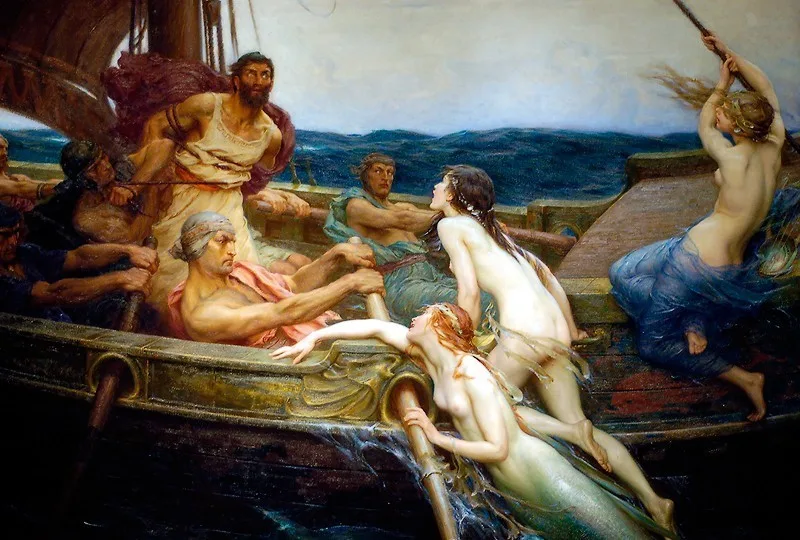
Fig. 5 H. J. Draper, Ulysses and the Sirens, 1909, oil on canvas, 175.9 cm × 210 cm, Ferens Art Gallery, Kingston upon Hull, UK.
However, the team of Clash of the Titans may not be the first ones that linked the Gorgons and the Sirens together. The few discovered parts of Sophocles’ play, Odysseus, mention the Sirens as “daughters of Phorcus,”[10] another name for Phorcys: the Gorgons’ father. As we don’t have the access to the complete play, this may both mean that they were siblings or the same people, which is a similar idea to the Medusa image in Clash of the Titans.
Likewise, victims of rape in modern society, especially if they are pregnant like Medusa was, are not only antagonised as the people responsible for what has happened to them but as if they are prostitutes, who are still a group of diabolised, condemned, low-status women in today’s society. Unfortunately, the social responses to these events are one of the major reasons many women who get sexually assaulted remain silent. Women are afraid of the curse, the demonification and the unfair judiciary system. As if the social pressure is not enough, a great number of countries don’t even justly punish the rapist. Turkey is the quintessence of this. One example is the case of 18-year-old İpek Er. She went missing in June 2020 and was found 9 days later, after she was raped by a 24-year-old sergeant, Musa Orhan. According to her family, she had told him that she could not return home after being raped if he doesn’t marry her but then he cut contact with her. Her family filed a criminal complaint against him for abduction and rape. However, it was only after İpek’s suicide attempt, which drew attention to the case on social media, that the case was taken seriously. After 34 days in the hospital, İpek died, while Musa Orhan was silently discharged 6 days after his arrest. Although his re-arrest was demanded, by February 2021, the demand was rejected twice and his trial was, once again, postponed to June which would mark almost a year since the incident. This case represents both the social pressure on the victim and how their lives and rights are not protected by the law, on top of the mental damage of the rape itself. A study found that 50% of the 158 female suicide attempters were sexually abused.[11] In a way, the judiciary system ends up being the executioner of the victim by freeing the rapist, which reassures other potential rapists that they wouldn’t be harshly punished, the way Athena leads Perseus to the death of Medusa.
The Greek myths are thought to date back to the 18th century B.C. and the first written mention of Medusa dates back to circa 8 A.D. With 35% of women worldwide having at least once experienced sexual harassment,[12] it is extremely sad that the story of Medusa is still relevant, maybe even more relevant than ever, in the 21st century. Every change starts within society, as many problems are created by society in the first place. Each of us needs to start to recognise the tragedy beneath the demonised Medusa, how our society harbours Poseidons, Athenas and Perseuses, and how we have the most crucial job as the interpreters of the stories of the silenced.
References
[1] Graves, R. The Greek Myths. (Penguin, 2017).
[2] Ovid. Metamorphoses. (trans. by Frank Justus Miller, ed. by Robert Squillace). (Barnes & Nobles Books, 2005).
[3] Ovid. P. Ovidii Nasonis Metamorphoses, Volume 1. (ed. by Gottlieb Erdmann Gierig). (E.B. Schwickerti, 1821).
[4] Ovid. Metamorphoses. (trans. by Brookes More). (Cornhill Publishing, 1922).
[5] Percy Jackson and the Lightning Thief dir. Chris Columbus. (20th Century Fox, 2010).
[6] Clash of the Titans dir. Louis Leterrier. (Warner Bros., 2010).
[7] Homer. The Odyssey. (trans. by Robert Fitzgerald). (William Heinemann, 1961).
[8] Physiologus. (trans. by Michael J. Curley). (University of Chicago Press, 2009).
[9] Dorofeeva, A. The siren: a medieval identity crisis. Mittelalter. Interdisziplinäre Forschung und Rezeptionsgeschichte. https://mittelalter.hypotheses.org/3612 (2014).
[10] Sophocles: Fragments. (trans. and ed. by Hugh Lloyd-Jones). (Harvard University Press, 1996).
[11] van Egmond M., Garnefski N., Jonker D., Kerkhof A. The relationship between sexual abuse and female suicidal behavior. Crisis. 14(3):129-39 (1993).
[12] World Population Review. Rape Statistics By Country 2021. https://worldpopulationreview.com/country-rankings/rape-statistics-by-country. (2021).