
Escaping the Echo Chamber: Liberal Democratic Societies and the Echo Chamber Effects
Introduction and description of echo chambers
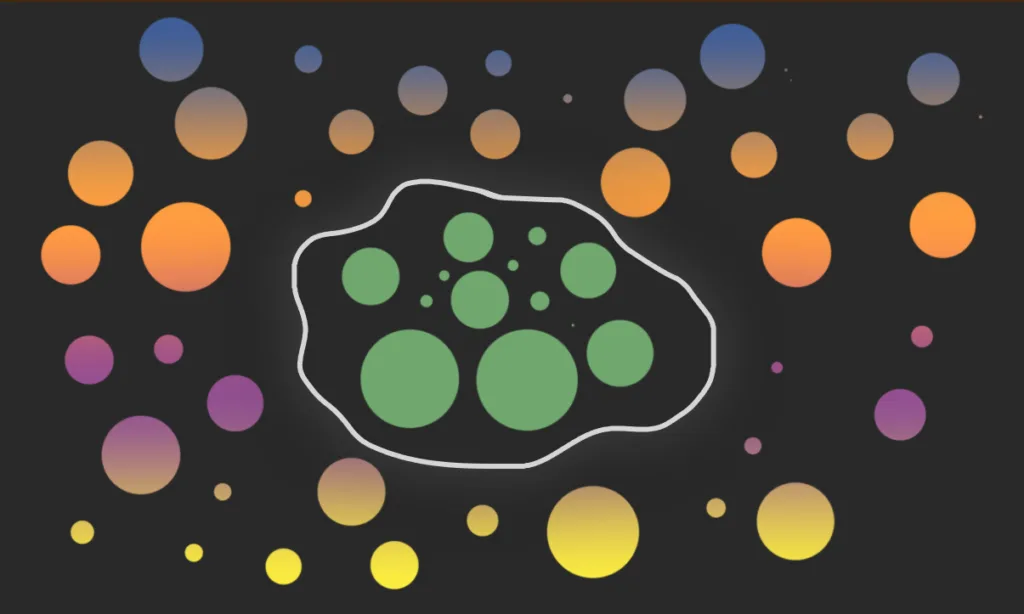
Echo chamber is a metaphor for a setting in which “only certain ideas, information, and beliefs are shared” and people in this setting self-select into it, only encountering ideologies they have already agreed with.[1] In the most extreme circumstance, this may lead to a situation in which people inside the echo chamber are completely isolated from the “free movement of ideas and information”, meaning that they do not observe any other view different to theirs.[1] Proponents of the echo chamber concept do not suggest that the aforementioned extreme circumstance occurs frequently. However, social media use has further increased the need for scholars to be aware of the processes involved in driving individuals away from circumstances that approximate access to a free movement of ideas and information towards situations approximating an echo chamber. According to the proponents of this concept, the internet has increased opportunities for individuals to “select information and communities which support their existing beliefs” and introduced the possibility of algorithmic personalisation contributing to the creation of echo chambers.[1]
Negative effects of echo chambers on elections and democratic process
The increased usage of online communication makes certain groups of people more vulnerable to online political targeting. A group of people are defined as "vulnerable" based on their relatively low level of education (thus they may have a less informed and narrower media diet), and their political neutrality. While social media and voter targeting do not have significant effects on ideologically identified groups,[1] they reportedly have significant effects on groups that are separated by education levels.[2] Neutral voters, who are exposed to social media sites such as Facebook on a daily basis, are inclined to support and vote for candidates who use more online micro-targeting on those voters, and their voting patterns are less likely to be strategic. Micro-targeting, in this context, is a marketing strategy that uses consumer data to create audience subsets and it is highly used by political parties and election campaigns. One explanation of this phenomenon is that the neutral voters who do not have Facebook accounts might be exposed to more sources of information and alternative forms of the campaign, while those who are frequent Facebook users are exposed to and targeted by political campaigns. The relationship between daily Facebook usage and the tendency of voting within the echo chamber is highly positive, especially when the education amongst the neutral voters is low.[2] Moreover, due to the lack of regulations on political advertising, social media websites are particularly subjected to echo-chambers through political micro-targeting. Therefore, voters who use social media daily are more likely to be trapped in their "chambers" and convinced by arguments that they have already agreed with, while filtering out information from the opposite point-of-view. As voters become more susceptible to extreme ideologies, echo chambers develop and, in turn, reinforce those extreme ideologies. The development of echo chambers contributes to the immense success of political micro-targeting in some demographic cohorts. It is also suggested that voters are less likely to consider other alternatives if they are intensely provided information by one side of the political competition.[2]
Feddersen and Pesendorfer show that “when voters are strategic, as the electorate grows large, the electorate chooses the correct outcome (according to their preferences) with probability one.”[3] This means that countries with a large population who vote strategically should achieve the social welfare maximising outcome in every election. However, due to echo chambers, this may not be the achieved equilibrium. If voters only corroborate their beliefs with people who have similar opinions, they may not recognise the opportunity for strategic voting, as they receive information less perfectly than optimal. This, in turn, may lead to unexpected electoral outcomes that fail to represent the total aggregation of voters’ preferences. There is evidence that echo chambers and the homogeneous groups they encase lead to voters behaving less strategically; voters are exposed to opinions of other members of the echo chambers, which cause them to have an unrealistic view of the intentions of the rest of the electorate. They will vote strategically by relying on the information they have obtained from their social network. If this social network is unrepresentative of the real electorate, they might view their vote as being in the winning side while it is instead in the minority, and they might turn out to be voting for a losing candidate without being aware of it.[4]
Indeed, the phenomenon discussed above can be shown in a model with two candidates A and B: even if a voter prefers candidate A, he is likely to change his mind and vote for candidate B if his friends and network are supporting voting for B.[4] Even though there is not a change in the preferences, the voting outcome is changed, and the voting is no longer considered as strategic. The voters falsely assume their friends are representative of the whole population. The main assumption of this model is concerned with homophily, the tendency for people to have close connections with people who are like them in various ways. If a homophily of opinion is present, then less strategic voting is observed and the Feddersen and Pesendorfer theorem is violated. Voters see their or their friends’ positions as representative of the wider population, and thus it might take more than the usual number of counterarguments to reassess and evaluate their voting outcomes.[4] A major assumption in political economy is that strategic voting leads to higher social welfare and thus to electorate choosing the correct outcome, which is the equilibrium that no one can better through deviation. Echo chambers cause a deviation from this welfare maximising equilibrium and may impede such strategic voting through the influence on preference aggregation, and this effect is magnified via social media.
Online echo chambers also increase ideological, political and social polarisation. Due to the algorithms, people are regularly provided with information according to their preferences and cookies records. They are more likely to be subjected to opinions that meet their pre-existed preferences, even though such preferences can easily be biased. News outlets, in this case, also feed the viewer with news that is based on their personal preferences, reinforcing their previous opinions, and resulting in ideological polarisation; potentially extending to greater political and social polarisation. Such effects have become more apparent in recent years, dramatized by a series of events that signals the rise of populism and conservatism across the globe including the previous election of Donald Trump, Brexit, the Yellow Vest movement in France and many more.
Echo Chambers in Brexit
Referendum campaigns are generally more polarised than campaigns for general elections due to the binary nature of choices available during a referendum.[5] In 2016, Britain held a national referendum to decide whether or not Britain should withdraw membership from the European Union. It was held at a time of reported polarisation among the electorate on the cultural and economic costs and benefits of the EU membership.[6] As a result 52% of British citizens voted to leave, while 48% voted to stay in the EU. The aftermath of the referendum is often regarded by the public as evidence of political fault lines and the recent global trend of rising populism.
Specifically, Del Vicario and colleagues have identified the polarisation in political ideology among Facebook users during the Brexit campaign and how concepts got shaped inside the echo chamber.[7] They identified a bimodal distribution of users based on the number of likes and comments on Brexit and non-Brexit Facebook pages, suggesting that users are divided into two distinct groups. Subsequently, by comparing how the same topics are presented on posts and different group’s emotional responses to the posts, they found significant differences in the perception and emotional response on topics for both echo chamber groups, showing the mechanism of how pre-existing views are reinforced and polarised after the formation of echo chambers.
Bossetta and colleagues found evidence suggesting that the political mobilisation by Facebook campaign pages led to the reinforcement of political position.[5] By comparing different media outlets, they also discovered that the Remain supporters (StrongIn) exhibited ideological reinforcement, as they have disproportional high tendency posting in media which exhibit similar ideologies.[5] It is evident that the mobilisation by Facebook campaign pages leads to the reinforcement of political positions and ideological alignment between the commenters of the Remain campaign and the pro-EU media. In contrast, the Leave supporters crossed into Remain media outlets more frequently and commented intensively.[5]
Moreover, Bastos and colleagues report that both Leave and Remain campaign Twitter users are significantly more likely to interact with users who also tweet highly partisan Leave hashtags.[8] Only approximately 10% of the Twitter users interacted with users of the opposite ideology. On the other hand, on average, the Leave communicated within a shorter distance than the Remain does, regardless of whether their communication style is in-chamber, out-chamber, or cross-chamber. The evidence concludes that the echo chamber communication in the Leave campaign is significantly associated with geographic proximity, while the Remain’s echo chamber communication extended to more distant users.
Empirical results of echo chambers on Brexit show that two distinct groups formed naturally - the Leave and the Remain. Both groups exhibited echo chamber behaviours that confine their attention to specific already-agreed contents and interact significantly more frequently within their own groups. Those behaviours, in turn, further reinforced and polarised the already-diverged political positions of the two, resulting in greater divergences and disagreements in the society. This means that echo chambers, at least in some degree, contributed to the prolonged and divided Brexit referendum and the chaotic deal negotiation, and we should be vigilant about the polarisation effect of echo chamber in any future political campaigns. By reasoning Brexit as an informational shock, Schilter reports a 21% increase in hate crime across Greater London and Greater Manchester shortly after the referendum, which is strongly associated with higher migrant share, income, and wealth; thus, showing a greater social polarisation and confirming the complex relationship between online echo chambers and problems in the real world.[9]
In the theoretical framework, it is specified that echo chambers have stronger effects on specific demographics. While there are no studies directly reporting on this issue about Brexit, there are ample works of literature regarding the different socioeconomic backgrounds of those affected, especially in the case of the 2016 US elections.[2] In addition, a study which took place in the UK affirms that being part of an echo chamber was more affected by political interest rather than gender or income.[1] Indeed, only a small size of the population that is less politically inclined would be under the influence of online echo chambers, as politically interested individuals would use the Internet to cross-examine sources of information. Further research in this area is required; if this limited impact is confirmed, it might also be that the negative impact of echo chambers is not as great as expected. Even then, they are certainly negative for the less politically inclined and for people spending more time on social media, with apparently as much as 61% of millennials using Facebook as their primary source of information.[10]
Conclusion
Evidence suggests that important policy steps need to be taken soon to reduce the negative impacts echo chambers have on democracy. Governments should conduct more research into how social media companies can be regulated without going too far in interfering with the private enterprise and possibly jeopardising citizen’s ability to derive utility from the services provided. Achieving this requires a greater interdisciplinary study on the part of government and academics as well as more government engagement with social media companies. For instance, one relatively simple policy step is to incorporate some teaching on the existence and dangers of echo chambers into the secondary education curriculum to children at the age of 13 (when they become legally old enough to join social media platforms). Several more lessons should also take place before compulsory education ends at the age of 18. Although there is likely to be a lag between the implementation of the educational reform and tangible impacts, it appears that efforts contributing to the prevention of echo chambers require fewer resources than actively dealing with existing echo chambers.
References
[1] Dubois, E. & Blank, G. The echo chamber is overstated: the moderating effect of political interest and diverse media. Information, Communication & Society, 21:5, 729-745 doi.org/10.1080/1369118X.2018.1428656 (2018).
[2] Liberini, F., Redoano, M., Russo, A., Cuevas, A. & Cuevas, R., 2018. Politics in the Facebook Era. Evidence from the 2016 US Presidential Elections. CAGE Online Working Paper Series, 389 https://warwick.ac.uk/fac/soc/economics/research/centres/cage/manage/publications/389-2018_redoano.pdf (2018).
[3] Feddersen, T., & Pesendorfer, W. The Swing Voter's Curse. The American Economic Review, 86, 408-424, http://www.jstor.org/stable/2118204 (1996).
[4] Tsang, A. & Larson, K. The echo chamber: Strategic voting and homophily in social networks. in Proceedings of the 2016 International Conference on Autonomous Agents & Multiagent Systems, 368-375, (2016).
[5] Bossetta, M., Segesten, A.D., & Trenz, H. Political Participation on Facebook During Brexit. Journal of Language and Politics, 17, 173-194 https://doi.org/10.1075/jlp.17009.dut (2018).
[6] Kriesi, H. & Frey, T. The United Kingdom: moving parties in a stable configuration. in West European Politics in the Age of Globalization (eds. Grande, E., Kriesi, H., Dolezal, M., Lachat, R., Bornschier, S., Frey, T), 183-207 (Cambridge: Cambridge University Press, 2018).
[7] Del Vicario, M., Zollo, F., Caldarelli, G., Scala, A. & Quattrociocchi W. Mapping social dynamics on Facebook: The Brexit debate. Soc Networks. 201, 6 -16 http://dx.doi.org/10.1016/j.socnet.2017.02.002. (2017).
[8] Bastos, M., Mercea., D. & Baronchelli., A. The geographic embedding of online echo chambers: Evidence from the Brexit campaign. PLoS ONE, 13, e0206841. doi.org/10.1371/journal.pone.0206841 (2018).
[9] Schilter, C. Hate Crime after the Brexit Vote: Heterogeneity Analysis based on a Universal Treatment. JEL Classification: J15, K42, C31 https://www.dropbox.com/s/3e7j9vluti0822w/JMP_claudioschilter.pdf?dl=0 (2018).
[10] DiFranzo D. and Gloria-Garcia K. Filter bubbles and fake news. XRDS: Crossroads, The ACM Magazine for Students, 23, 32-35 https://doi.org/10.1145/3055153 (2017).
Del Vicario, M., Bessi, A., Zollo, F., Petroni, F., Scala, A., Caldarelli, G., et al. The spreading of misinformation online. Proceedings of the National Academy of Sciences, 113, 554-559 http://doi.org/10.1073/pnas.151744113 (2016).
Karlsen, R., Steen-Johnsen, K., Wollebæk, D., & Enjolras, B. Echo chamber and trench warfare dynamics in online debates. European Journal of Communication, 32, 257–273. https://doi.org/10.1177/0267323117695734 (2017).
Pogorelskiy, K. & Shum, M. News We Like to Share: How News Sharing on Social Networks Influences Voting Outcomes. Available at SSRN: https://ssrn.com/abstract=2972231 or http://dx.doi.org/10.2139/ssrn.2972231 (2019).
Zollo, F., Bessi, A., Del Vicario, M., Scala, A., Caldarelli, G., Shekhtman L., et al. Debunking in a world of tribes. PLoS ONE. 2017; 12, e0181821. http://doi.org/10.1371/journal.pone.0181821 PMID:28742163 (2017).
Photo: Senalp Canlıbel, based on https://commons.wikimedia.org/wiki/File:FilterBubble.jpg.