

Urban in Cyprus: Ottoman
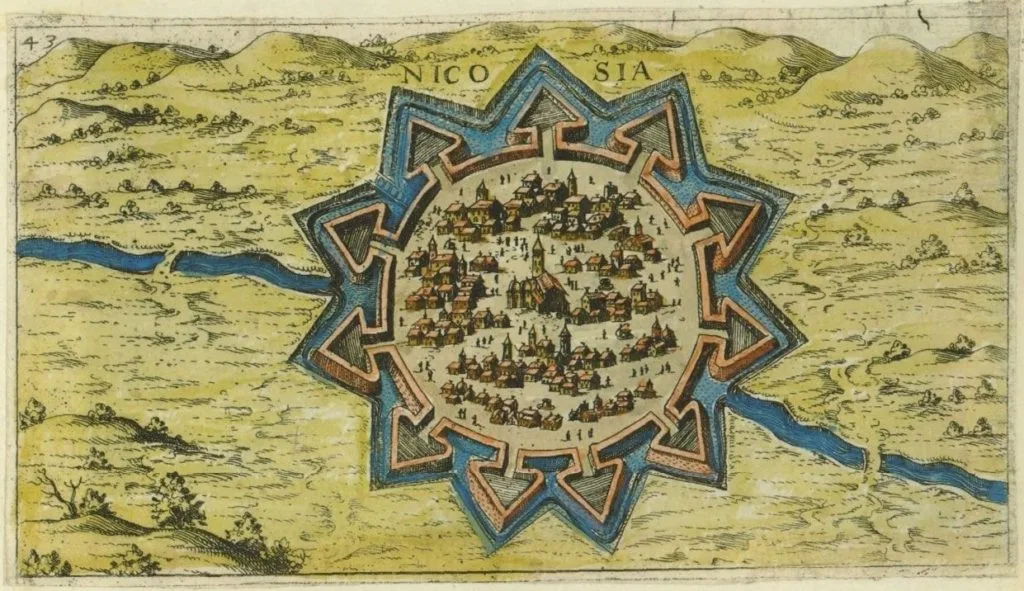
Cities and city life are pivotal elements in shaping a people’s very nature. They make, mend, and minister the political, social, economic, and cultural landscape that forms, amends or alters key variables affecting the individual as much as the community as a whole. Either be a political centre or trade entrepôt, cities have always been associated as a bed of progress and constant change. Away from the traditional life of rural areas, urban is a life of risk and reward, of success and failure, of misery and affluence.
Yet the defining question still remains: what is urban? The answer to that question, so critical for the purpose of this article, is always nonstandard. Basically, it depends on who is answering. UN Population Division has compiled the criteria for defining urban areas from 232 countries.[1] In this list, “urban” ranges from a simple population size threshold -as in North Cyprus[2]- to a complex set of requirements that combine factors such as population density, economic activity and infrastructure, etc. Sometimes, there is simply no criterion: just administrative decisions, generally based on some traditional understanding or political history, that say, “this is urban, that is rural”.[3] To sum, defining “urban”, “town” or “city” is a matter of local standards: tailored to the needs of the size, administrative capacity, existing population of the country and the period in which these definitions are/have to be made.
For this article, I shall endeavour to make a definition for the not-so-distant past. Whilst discussing the period up until 1974, I will employ definitions based on people’s expressions, administrative definitions, and consider the apparent “role” of the settlement in the overall landscape of the country.[4] Post-1974, I will try to have a uniform approach to definitions, which will be explained in detail later on. Due to limited space here, as well as a desire to construct a narrative carrying on to the north Cyprus, I will initiate the story at around the end of the Ottoman period. But make no mistake: “urban” in Cyprus has always been there. Imitating a cyclical pattern, it rose and fell as time passed and human and nature interacted, sometimes violently.
Synopsis of the Ottoman times
After 1571, when the island was conquered by the Ottomans, it could be argued that urbanisation was beginning to form, perhaps for a second time, as a “proto-urbanisation”; global developments -including the discovery of America by Europeans and rising global trade- as well as the trade agreements of the Ottoman Empire with European powers have influenced trade and industry on the island. However, this process was ever so gradual. Initially, the war for Cyprus in 1570-1 devastated the population and the structures on the island. Nicosia was reportedly gravely damaged, so much that only 235 adult males was found after a survey in 1572.[5]
Thereafter, to make the island economically viable, Ottomans initiated forced migration to the island from other Ottoman territories.[6] Thus, a Muslim population began to form and grow;[7] this policy of forced migration was maintained all the way until the 18th century[8]. Among these Muslim immigrants, due to exclusive employment in certain administrative bodies, as well as being the “ruling class” of the island, city centres were the greatest attraction for settlement. Indeed, the local town dwelling non-Muslim population who were not craftsmen were made to leave the city centres of Nicosia and Famagusta and settle outside the city walls.[9] Furthermore, at least between 16th and 17th centuries, there is evidence for rural-to-urban and rural-to-rural inner migration since villages were gradually abandoned for better economic chances in other locations.[10]
Famagusta is an interesting case regarding the political purpose of the city as well as the effect of inner migration. The city walls that define the town centre became an instrument of urban policy. As such, shortly after the Ottoman conquest, non-Muslims were made to leave the town centre due to “strategic reasons”.[11] City walls allowed the administration to control the admission of new non-Muslim arrivals to the city centre.[12] This concurred with the trend of inner migration (Perhaps following it?) and the population began to accumulate outside the city walls. Thus, a form of city sprawl developed after 1571, notable for the eventual establishment of the settlement of Varosha.
In the 19th century, formation of an entrepreneurial bourgeois class, most of whom were Orthodox Christians (Greek Cypriots),[13] improved trade and capital accumulation, thus moved people from agricultural (rural) employment to trade and commerce (urban employment). On the other hand, Muslims (Turkish Cypriots) were more traditional in their occupational choice: villager Muslims were farmers and manufacturers -in the non-industrial meaning- whereas town dwelling Muslims were generally employed in the administration; in positions such as public clerks and police officers.[14]
Towards the end of the Ottoman period -late 19th century- the two cities can be described as more trade-oriented: Larnaca (Tuzla and Skala) and Nicosia. Nicosia kept its gravitational location as the political and administrative centre[15], but Larnaca was the result of foreign merchants replacing themselves after being deported from Famagusta but wished to remain in a seaport city due to political and commercial concerns. Nicosia had a Muslim majority whereas Larnaca was mostly non-Muslim.[16] This affected the character of both cities, but for the purpose of this article, these facts should illustrate the point above: whilst Muslims were more interested in governmental employment, non-Muslims, perhaps due to their comparable advantage, were concentrated more in trade and commerce. Still however, all cities served an important political purpose, which was conspicuous as most of the city centres were Muslim (ruling class) dominated areas.[17]
So Far, and What Happens Next?
For now, I have identified these developments and characteristics of urban in Ottoman Cyprus as critical for the later eras. In short, Ottoman rule saw changing of the urban settlement pattern and affected internal migration flows. City centres became strategic locations for the ruling elite to occupy, while non-Muslims were made to form a settlement sprawl in the vicinity of these centres. Occupational choices reflected religion-based institutional incentives and disincentives. As time passed, global trends changed, and trade and commerce became more crucial and advantageous to non-Muslim population. Although much more can be written of this period, this still should suffice for the aim of this article.
There is still much to learn about towns and cities in Ottoman Cyprus. Was there a spatial segregation based on wealth or religion?[18] How was the political structure; how powerful was the local elite? To what extent were the townspeople (ethnologically) employed in the commercial sector? Lack of, and unexplored, data regarding economic activities in Cyprus for the bulk of the Ottoman period restricts the investigation and the narrative to these scattered accounts that “imply” urban development. This development may or may not have affected the “urban life” in Cyprus.[19] Similar restrictions existed for the British colonial period, but the decennially held censuses from 1881 to 1948 tells the story of urbanisation more clearly: as the world became more industrialised and stirrings of nationalistic attitudes emphasised “national” economic developments, cities became much more central to achieve both individual and communal success. My next article will try to briefly investigate these changes in the urban society in particular, and on the island in general; for this period, it could be argued that urbanisation in this period was a Greek Cypriot phenomenon.
References
[1] United Nations, Department of Economic and Social Affairs, Population Division (2018). World Urbanization Prospects: The 2018 Revision, Online Edition.
[2] Any settlement with a population at 5001 and above is identified as a town. An exception to this rule is that any settlement designated as a district centre is identified as a town regardless of its size. See Kuzey Kıbrıs Türk Cumhuriyeti Meclisi. Mülki Yönetim ve Bölümleri Yasası (33/1998). (2017).
[3] Which was the norm in the whole Cyprus until 1974, and only in south Cyprus after that.
[4] This article is not a comparison of how “urban” Cyprus has been throughout the time, since for that a reliable data that is comparable need to be formed for the time frame of this article. I am unaware of any work that has attempted that.
[5] Jennings, R. C. Christians and Muslims in Ottoman Cyprus and the Mediterranean World (1571-1640). (New York University Press, 1993), p.256.
[6] ibid, p.212; Gazioğlu, A. C. The Turks in Cyprus: A Province of the Ottoman Empire (1571-1878). (K. Rustem & Brother, 1990), p.74-75.
[7] An idea is that Ottomans wanted to alter religious base of the island (make it Muslim), but evidence is scarce while primary priority of populating for flourishment seem closer to the truth: see, again ([5]), Jennings 1993, p.212-239.
[8] Gazioğlu, A. C. The Turks in Cyprus: A Province of the Ottoman Empire (1571-1878). (K. Rustem & Brother, 1990), p.80.
[9] Özkul, A. E. Kıbrıs’ın Sosyo-ekonomik Tarihi (1726-1750). (Dipnot Yayınları, 2010), p.45.
[10] Erdoğru, M. A. Kıbrıs’ta Osmanlılar 2. (Galeri Kültür Yayınları, 2009), p.42-43
[11] This is how Gazioğlu (1990, p.xiii) refers to it. See note 8.
[12] Erdoğru, M. A. Kıbrıs’ta Osmanlılar 2. (Galeri Kültür Yayınları, 2009), p.48.
[13] Gazioğlu, A. C. The Turks in Cyprus: A Province of the Ottoman Empire (1571-1878). (K. Rustem & Brother, 1990), p.191; Michael 2010, p.85-87.
[14] Gazioğlu, A. C. The Turks in Cyprus: A Province of the Ottoman Empire (1571-1878). (K. Rustem & Brother, 1990), p.151.
[15] For an account of urban transformation in Nicosia, see Psaltis, G. Nicosia: From a Rural Society to a Modern Capital. Halkbilimi 55 p.126-131 (2007).
[16] Michael, M. Cities and Ideologies in 19th Century Cyprus: A Traditional Capital and a Modern Port City. Chronos 22 p.85-106 (2019), passim.
[17] Özkul, A. E. Kıbrıs’ın Sosyo-ekonomik Tarihi (1726-1750). (Dipnot Yayınları, 2010), p.208.
[18] Religious segregation was an Ottoman policy, but real-life applications were much more flexible (Faroqhi, S. Part II Crisis and Change 1590-1699. In An Economic and Social History of the Ottoman Empire, vol. II (1600-1914) (eds. İnalcık, H. and Quataert, D.) p.580-581 (Cambridge University Press, 1994).). Indeed, even in Cyprus trade of property was evident between Muslims and non-Muslims. (Özkul, A. E. Kıbrıs’ın Sosyo-ekonomik Tarihi (1726-1750). (Dipnot Yayınları, 2010). passim).
[19] Jennings (1993, p.249) claims that what “urban life” meant in Ottoman Cyprus was not different from Venetian Cyprus for 16th and 17th centuries.