

Let’s Talk About the Elephant in the Room: Defunding the Police
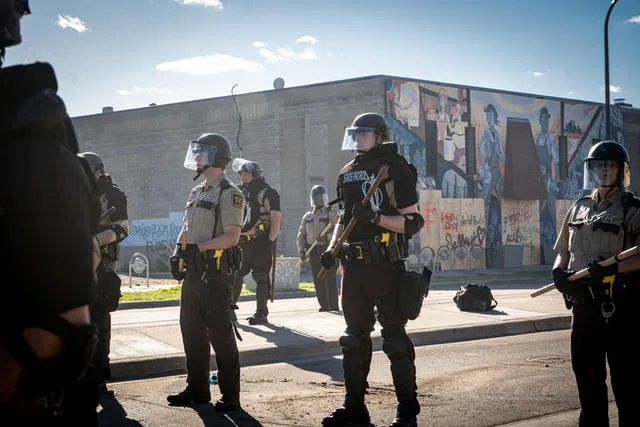
With the death of George Floyd, abolishing and defunding the police have been on the agenda for American citizens and international supporters from all over the world. Defunding the police does not mean a rapid end to policing and the consequences associated with crime, but rather a re-allocation of limited resources into social entities, such as education and housing, that keep individuals from encountering or causing violence in the first place. This policy depends on the basic idea that prevention is better than punishment. On the other hand, those who oppose this idea are mainly concerned about safety post-defunding. We often talk about police as if they have existed throughout history but they are a recent invention. Before the 19th century, there were informal institutions that were responsible for the safety of the public. Defunding the police means that resources will be redirected to more qualified and unbiased institutions which can keep the society as a whole, safer. As expressed by the MPD150, an initiative working for police and structural reform in Minneapolis, this change in policy is about "strategically reallocating resources, funding, and responsibility away from police and toward community-based models of safety, support, and prevention" rather than a total and immediate defunding of all departments.[1]
MPD150 also emphasised that "the people who respond to crises in our community should be the people who are best equipped to deal with those crises".[1] One particular case concerning this is mental health: in the presence of a mental health crisis, people are more likely to encounter a police officer rather than a medical employee. According to two separate studies conducted by National Alliance on Mental Illness (NAMI) and Treatment Advocacy Centre, around 15% of men and 30% of women taken to jails have a serious mental health condition, while one in four people killed by the police has a severe mental health issue.[2][3] Punishment in the presence of mental illness only leads to a vicious cycle that needs an established strong social system to break: a criminal record translates into a lack of access to mental healthcare and benefits, which further causes a rise in homelessness or worsening of the individuals’ condition.[4] Consequently, re-arrests take place. It is then not surprising that the average recidivism rate in the US is around 43%.[5]
There is another major problem regarding the police when it comes to the topic of mental health: safety. One major example is the disturbing video of a nursing student being dragged and stepped on by an RCMP officer in Vancouver in January 2020.[6] Further investigation confirmed that it was supposed to be a wellness check and the situation could have been handled by a specialised mental health unit, but the unit was not staffed on the night of the incident. This is one of the consequences of underfunded and undervalued mental health services. This incident is the proof that there should be a dynamic power shift from undertrained strangers armed with guns -who most of the time do not even live in the neighbourhoods they patrol- to mental health providers and social workers.
While the presence of an armed officer usually escalates the situation, social helpers and mental health providers are equipped with the tools required for de-escalation, such as the one above. Their job requirement and skills include the ability to connect people with much-needed support, which can have a long-lasting positive effect on many lives. Meanwhile, a police officer’s job entails making arrests and finding evidence in support of a crime. The arrest is then evaluated by the legal system, based on the evidence provided. Following the decisions made by a jury or a judge -depending on the legal system of the country in question- the arrested individual is either convicted or not. In the case of a conviction, the individual consequently goes to prison. The police officer only causes the individual to be incarcerated without any support they need to improve their lives.
Ironically, the main argument against the defunding of the police is safety. Yet, the feeling of safety that one associates with the security provided by the police is an illusion of the privileged. Apart from the numerous examples of improper intervention in the area of mental health by the police, there is also evidence of inequality when it comes to race. More force is used against Black people, compared to White and Asian ethnic groups, and they are more likely to be arrested and sentenced.[7] The Crime + Punishment documentary examines how officers are still expected to make a certain number of arrests, even though arrest quotas have been banned in New York since 2010.[8] In the documentary, a police officer explicitly says that he was told to "arrest Black males between the ages of 14 and 21" and faced the consequences for not doing so. This is mainly because of the financial rewards: police officers receive more money in overtime pay due to an increased number of arrests. There is no official policy, but it is an unwritten understanding in many departments. As explored in the documentary, police officers reach these unofficial quotas by making arrests in Black neighbourhoods where people lack the financial resources needed to fight them. The US is not the only culprit as police brutality is a global problem. For instance, there is disproportionality in the use of force against Black people in the UK: "the proportion of BAME deaths in custody where restraint is a feature is over two times greater than it is in other deaths in custody."[9]
If you are still wondering how you, as a privileged member of the society, would keep safe in the case of police defunding, there is one thing you have not considered: crime is not random. In most cases, it is the sign of something missing; these include, but are not limited to, basic needs, housing, and mental health support. By re-allocating the budget of the police departments to services that help reduce these needs, a dramatic fall in crime rates is likely to be observed, which is supported by the research done in crime prevention through social development.[10] According to a paper published by a group of World Bank researchers, less inequality means less crime.[11] Controlling for reverse causality and external factors, their research concluded that a more equal distribution of income has contributed to a fall in violence at the municipal level.[11] Governments need to promote economic growth and invest in social policies designed to support less privileged households. Structural reform is needed when it comes to education and housing; to improve both quality and quantity provided and to make them more accessible. To make this a reality, funds are needed, and this can easily be reallocated from the budget of the police force. After all, it is more effective to treat the problem rather than the symptom.
References
[1] MPD150. Building a Police-Free Future: Frequently Asked Questions. Enough is enough: A 150 year performance review of the Minneapolis police department. https://www.mpd150.com/wp-content/uploads/2020/06/MPD150-FAQ-Text.pdf (2020).
[2] National Alliance on Mental Illness. Jailing People with Mental Illness. https://www.nami.org/Advocacy/Policy-Priorities/Divert-from-Justice-Involvement/Jailing-People-with-Mental-Illness (2010).
[3] Fuller, D. et al. Overlooked in the undercounted: The role of mental illness in fatal law enforcement encounters. Treatment Advocacy Center. https://www.treatmentadvocacycenter.org/storage/documents/overlooked-in-the-undercounted.pdf (2015).
[4] Couloute, L. Nowhere to Go: Homelessness among formerly incarcerated people. Prison Policy Initiative. https://www.prisonpolicy.org/reports/housing.html (2018).
[5] Center, P. State of recidivism: The revolving door of America’s prisons. Washington, DC: Pew Charitable Trusts. https://www.pewtrusts.org/en/research-and-analysis/reports/0001/01/01/state-of-recidivism (2011).
[6] Hernandez, J. B.C. nursing student who brought wellness check lawsuit against RCMP speaks at Vancouver rally. CBC News. https://www.cbc.ca/news/canada/british-columbia/b-c-nursing-student-who-brought-wellness-check-lawsuit-against-rcmp-speaks-at-vancouver-rally-1.5646607 (2020).
[7] Fryer Jr, R. G. An empirical analysis of racial differences in police use of force. Journal of Political Economy, 127, 1210-1261. https://www.journals.uchicago.edu/doi/abs/10.1086/701423 (2019).
[8] Maing, S., Tuttle, R. & Metzgar, E. Crime + Punishment. https://www.crimeandpunishmentdoc.com/ (2018).
[9] Inquest. BAME deaths in police custody. https://www.inquest.org.uk/bame-deaths-in-police-custody (2020).
[10] Waller, I. & Weiler, D. Crime prevention through social development. Ottawa: Canadian Council on Social Development. https://www.ncjrs.gov/pdffiles1/Digitization/103113NCJRS.pdf (1985).
[11] Enamorado, T. et al. Income inequality and violent crime: Evidence from Mexico's drug war. Journal of Development Economics, 120. http://documents1.worldbank.org/curated/en/236161468299090847/pdf/WPS6935.pdf (2016).