

Du Bois' Double Consciousness
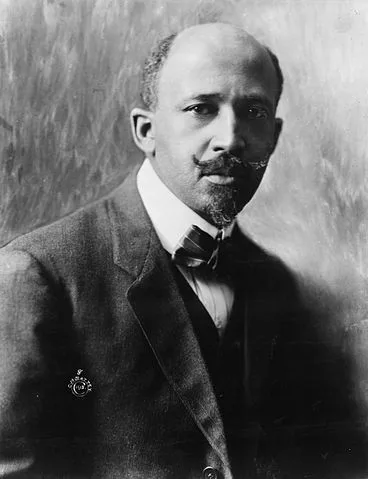
E. B. Du Bois developed the theory of “double consciousness” and published an autoethnographic work called The Souls of Black Folk in 1903. As a black writer, Du Bois explained the theory of double consciousness over race and ethnicity.
In his book, Du Bois mentions: “The Negro is... It is a peculiar sensation, this double-consciousness, this sense of always looking at one's self through the eyes of others, of measuring one's soul by the tape of a world that looks on in amused contempt and pity.”[1]
This quote summarises the whole theory by saying "looking at one’s self through the eyes of others." Here, Du Bois wanted to focus on the internal conflict that one might suffer in an oppressive society. People might feel stuck between their own "self" and the created or insisted self from society.
Do we actually know who we are? Or are we false conscious about ourselves because of society’s labels? If there were no labels and no restrictions, who would you want to be?
Society says; "Black people are violent.", "Women cannot become scientists.", "You need to be skinny and pretty to be loved.", "Men look weak if they show their emotions.", "Migrants are dangerous."…
These are the labels we live with in everyday life, and they are just myths. They are insisted upon to control people on what they can and they cannot do. To make one believe that they are weak, they are dangerous, they are ugly… Through this system, society subordinates, exploits and controls some groups easier than others: such as the subordination of women by men, or that of the working class by the ruling class. This system of labelling benefits one side whilst exploiting the other.
Especially on the black people’s exploitation and suffering through slavery in the nineteenth century.
Du Bois argued, “He felt his poverty; without a cent, without a home, without land, tools, or savings, he had entered into competition with rich, landed, skilled neighbours. To be a poor man is hard, but to be a poor race in a land of dollars is the very bottom of hardships”.[1] White people owned the goods and the lands and black people, as migrants, were exploited to serve and become slaves. Racism brought class diversity and placed the black people into unskilled jobs with low statuses. This kind of hegemonic and hierarchical system, caused black people to accept oppression from the society and accept their inferiority compared to white people.
Once again, Du Bois explains how people can be deceived by false labels from society and become double conscious about their own "self". As Du Bois’ term; "feeling twoness" between who we truly are and who the society insists that we are.
Do you really know who you are? Your capacity? Your wishes? Your desires?
Who are you when there are no labels and restrictions?
You are beyond society’s limitations.
References
[1] DuBois, W.E.B. The Souls Of Black Folk. (Chicago: A. C. McClurg & Co, 1903).
Photo: Cornelius Marion Battey, https://commons.wikimedia.org/w/index.php?curid=1657440.