

International Relations · Politics
A Shift of Conflict: the Clash of Civilisations
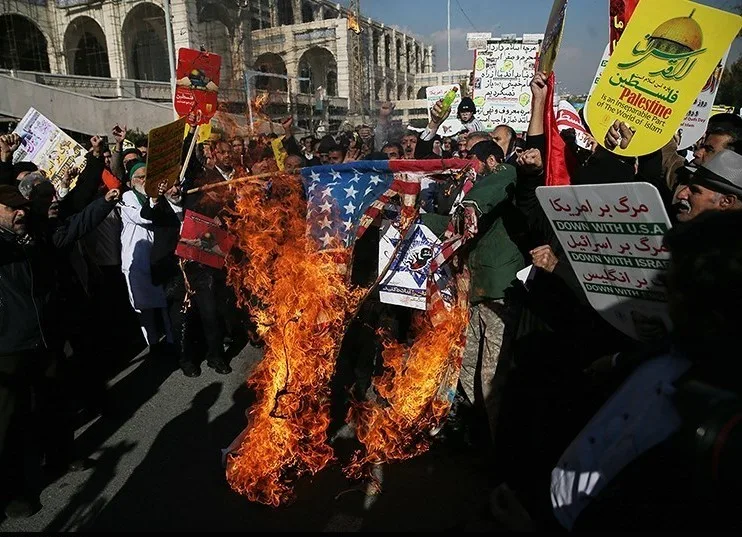
Modern international politics has seen a term of conflict which lasted for over forty years: the Cold War, which was an era of ideological conflict among two superpowers -namely, the United States of America and the Soviet Union- and their allies. Without a doubt, the end of this ideological conflict brought upon a new phase, even a new order. One of the most distinguished political scientists, Samuel P. Huntington, suggests that in this new world, conflicts would neither be ideological nor economic but something more abstract; they would be cultural.
In his famous thesis, The Clash of Civilizations, Huntington has argued that the conflict in international politics will arise among different cultural identities; namely different civilisations.[1] It is further argued that reasons for conflict will mainly revolve around cultural elements and topics, rather than ideological or economic problems. According to Huntington, the concept of "civilisation" refers to a cultural entity, made up of, regions, ethnic groups, nationalities and religious groups.[1] Therefore, it can be said that cultural identities are more collective, binding and effective, and they differ from ideological identification; the intensity of identification to them will also be higher than that of ideological identities. "Civilisation", made up of all these cultural identities, is the broadest level of identification. Due to this, the conflict it will lead might be denser and stronger than the conflict caused by ideological elements.
Since cultural characteristics and identity differences are not prone to change as much as the ideological ones, a culture-based conflict would be more challenging to resolve compared to political ones. Due to this reason, the inevitable shift in the nature of conflict -from ideological to cultural- may arise at two different levels. Firstly, at a micro-level, among neighbouring or intersecting civilisations, and secondly, at a macro-level, between different civilisations, at a large-scale clash. Historical developments since the end of the Cold War, some of them which will be elaborated below, might provide evidence for Huntington’s thesis and for clashes occurred and still occurring at both levels.
To discuss the micro-level, the clash may arise both in places where two or more civilisations intersect and in places where there is a fault line among two civilisations. With regards to the intersection of civilisations, one of the most notorious cases is the Balkans, which can be seen as an example of intersection of multiple identities -former Yugoslav communities involving Western and Orthodox Christianity alongside Islam- attempting to exist together and consequently leading to an atmosphere of conflict. The civil war, which had erupted in mid-90s mainly due to identity politics, might show us that micro-level clash is possible and can cause conflict between groups having cultural distinctions. In addition to this, at micro-level, conflicts may also erupt along the fault lines of groups with different identities or in torn countries which are defined by Huntington as “countries which have a fair degree of cultural homogeneity but are divided over whether their society belongs to one civilization or another”.[1] One of the most striking examples, in this case, is Turkey with its diverse society including the presence of multiple ethnic identities and contention between Western and Islamic identity. The latter factor has even led Huntington to identify Turkey as the most profoundly torn country in the world.[1]
On the other hand, clash at macro-level involves large scale conflicts amongst two or more civilisations, which are mainly more intense and prolonged than those at micro-level. The main reasons for the clash at this level are considered as; conflicting cultural values, the power struggle between cultural identities and rivalry of religious and traditional values. At this level, the most significant clash was predicted to be between Western Christianity and Islam, especially concerning the traditional customs and religious values.[2] After the Cold War, the first-ever clash between the West and Islam was the 9/11 attack to Twin Towers in New York, followed by the US and its Western allies’ declaration of war on terrorism which was against Islamist fundamentalism. However, a more prominent and long-lasting clash between these two civilisations had already been happening with regards to customs and values, as there is a huge gap between two civilisations on social values such as gender equality, compared to political values such as democratisation.[2]
In the contemporary world, although there is a clash between most of the civilisations, it appears that the most intense one is between the West and Islam which concerns the struggle of traditional, religious and social values and identities. In the light of this, I would argue that Huntington might be correct in his thesis of a shift from a clash of ideologies to a clash of civilisations in the new world order, especially when considering the cultural clash in 30-year-period in the post-Cold War era which might have taken place even stronger than ideologies.
References
[1] Huntington S.P. The Clash of Civilizations?. In Culture and Politics (eds. Crothers, L. & Lockhart, C.) 99-118 (New York: Palgrave Macmillan, 2000).
[2] Norris, P. & Inglehart, R. Islamic culture and democracy: Testing the ‘clash of civilizations’ thesis. Comparative Sociology, 1, 235-263 (2002).
Photo: Tasnim News Agency, CC BY 4.0, https://commons.wikimedia.org/w/index.php?curid=64783311.